
How to start a Keto diet
1. Find out: what is Keto diet?
Keto diet (Ketogenic diet) this is a low-carb diet with a high percentage of fat in the diet, in which the body produces ketones in the liver and uses them as energy.
Initially the main most familiar and accessible source of energy for our body is glucose. When you eat something high in carbohydrates, our body processes them into glucose, which increases the blood sugar and for its stabilization and the distribution of glucose in the cells of the body, the pancreas produces insulin. Glucose is the simplest molecule in our body that is converted and used as energy, so it will be chosen over any other source of energy. Insulin is produced to process glucose in the blood by moving it throughout the body. Since glucose is used as an energy source, your fats are not needed and therefore accumulate. Typically, in a normal, higher carbohydrate diet, the body will use glucose as the main form of energy. By reducing carbohydrate intake, the body is induced into a condition known as ketosis. Ketosis is a natural condition of our body, which starts with a low content of glucose in the diet. With him, the body produces ketones, splitting fatty acids, to provide us with a sufficient level of energy, nutrition of brain cells and organs. The main goal and ultimate goal of keto diets is to switch us to the state of ketosis. It is important to understand that it does not start with a lowcalorie intake, but with a low carbohydrate content in the diet.
Our bodies are incredibly adaptive – as soon as they lack glucose, they easily switch to ketosis and begin to use fats as the main source of energy. The optimal level of ketones and low blood sugar levels give us a lot of advantages: from a general improvement in health and a decrease in the percentage of subcutaneous fat, to an increase in mental concentration, energy level and vitality.
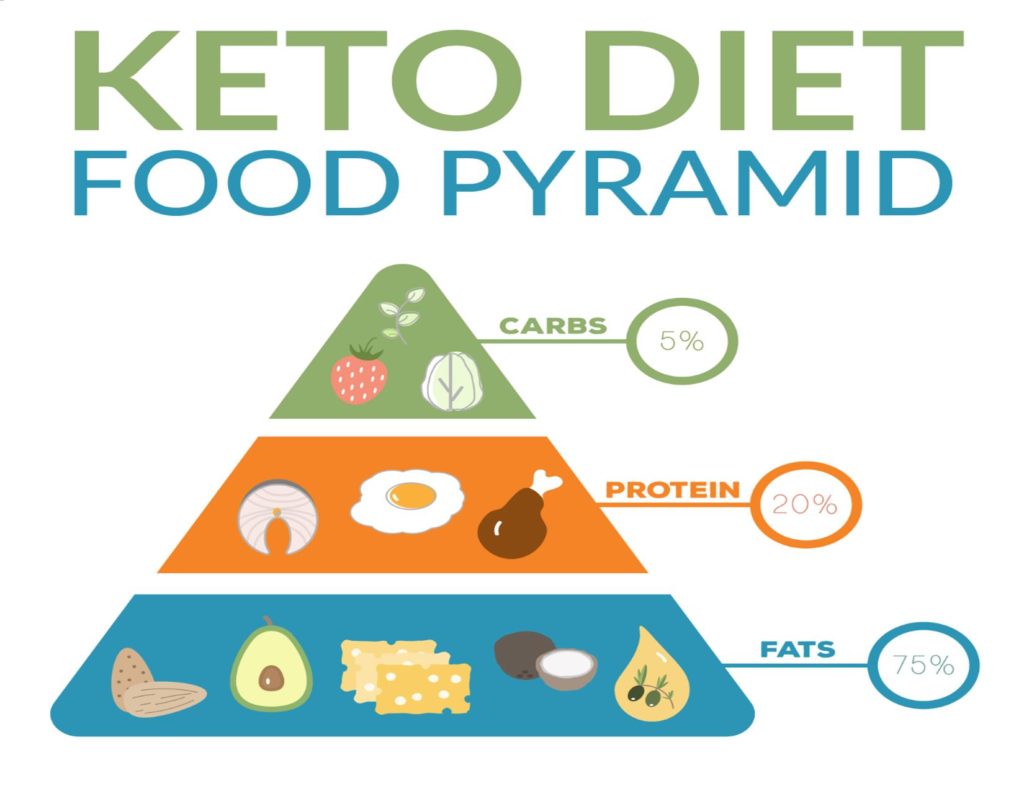
A keto-diet implies a high fat content, a moderate protein content and a very low carbohydrate content. Nutrient intake should be about 70% fat, 25% protein and 5% carbohydrates.
2. What are the benefits of Keto Diet?
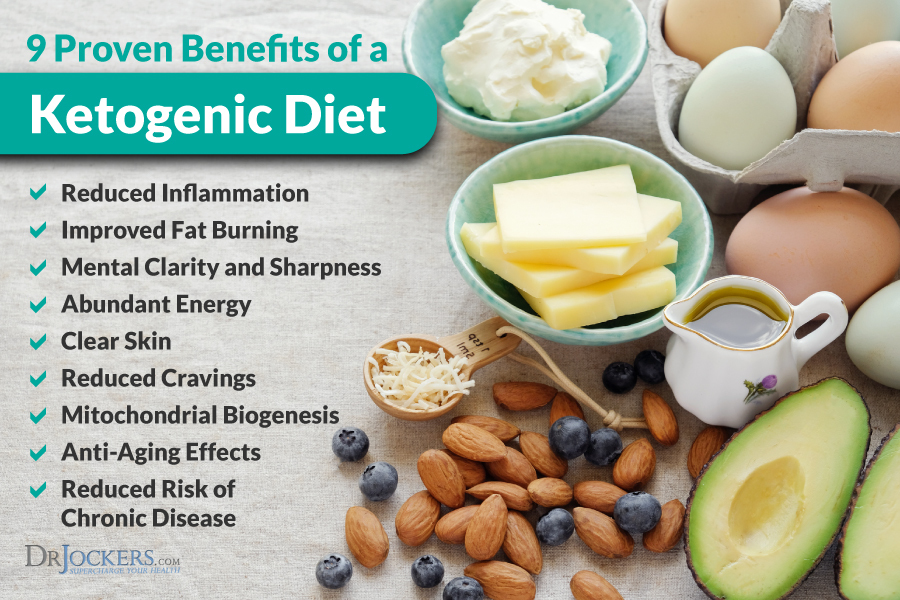
There are a number of many benefits of keto diets: from losing weight and increasing energy levels to improving various medical health indicators. Below you will find a list of the main benefits you can get from the ketogenic diet.
❊ Weight loss The ketogenic diet switches your body to use fat as the main source of energy, so with a calorie deficit, your body is more likely to pinch and burn your fat layer. First of all, this is due to the constant level of sugar in the blood and, as a result, the lack of insulin emissions. Studies show that in the long term keto diet is much more effective for losing weight than any counterparts.
❊ Sugar control As written above, due to the almost complete absence of carbohydrates in the diet, you always maintain an even level of sugar in the blood and do not cause significant insulin emissions. This makes the keto diet a great solution for preventing and even treating diabetes.
❊ Mental focus A high intake of fatty acids and the absence of sugar jumps in the blood is an excellent method to increase concentration for a long period of time and to improve the focus of attention. Many people notice significant improvements in mental activity after two to three weeks on a keto diet.
❊ Increased energy and appetite control
Fats are a good source of energy that helps us feel fresh and energetic throughout the day. In addition, high-fat foods are very satisfying, and if you want to lose weight, it will be much easier to stick to the required level of calories and control your appetite.
❊ Lower cholesterol and pressure A ketogenic diet is an effective method of reducing “bad” cholesterol, and by reducing weight, which usually occurs on a keto diet, blood pressure is normalized.
❊ Insulin resistance Insulin resistance a violation of the metabolism of insulin in the blood. In particular, the pancreas begins to produce more insulin for the distribution of glucose into cells than is necessary for a healthy person. Elevated plasma levels of insulin can cause overweight and type 2 diabetes. A typical reason for the occurrence of such a disease is a diet with a high content of carbohydrates and, as a result, constant jumps in blood sugar levels.
❊ Acne treatment Those who have switched to a ketogenic diet almost always notice improvements in their skin condition. Studies suggest that acne is often caused by malfunctions in glucose metabolism and its increased dietary intake. Also, a decrease in the level of consumption of dairy products (in particular, lactose) in almost 100% of cases has a positive effect on the condition of the epidermis .
3. What is the Keto Flu and how to avoid it?
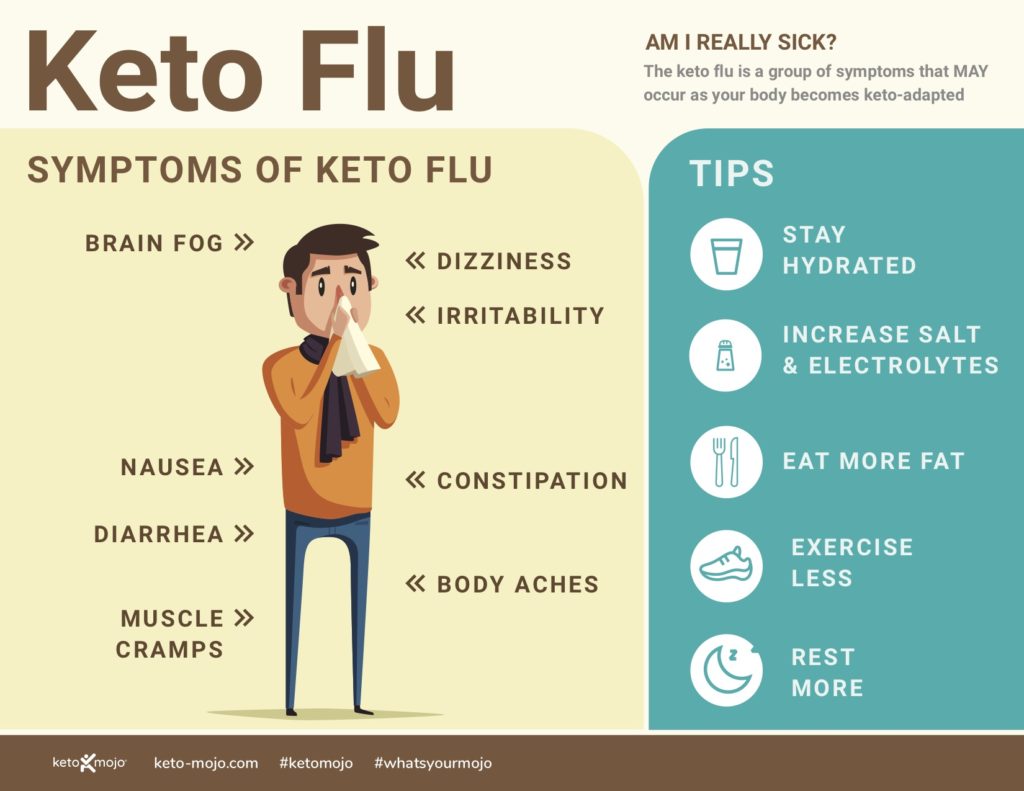
Keto flu is not a virus that infects only those who decide to try a ketogenic diet. This is the body’s response to carbohydrate restriction. The most common symptoms of keto-flu are craving for sugar, dizziness, irritability, fog in the head and poor concentration, stomach pain, nausea, cramps, muscle soreness and insomnia. To avoid this, follow these simple rules:
1. Drink more water (with a pinch of unrefined salt). Hydration is vital, especially when you are on a ketogenic diet. If during a keto diet you do not drink enough water, you can easily dehydrate and experience side effects.
2. Supplement your diet with sodium, potassium and magnesium. To get enough potassium, add avocados and leafy greens such as spinach to your diet. Add a little crude salt to each meal and to water to replenish sodium levels. Magnesium is another important mineral that can significantly ease your transition to ketosis. Although you do not lose magnesium, while limiting carbohydrates, it is important to help you prevent and eliminate cramps, improve sleep quality and increase insulin sensitivity. Simply add pumpkin seeds, almonds and spinach to your diet.
3. Eat more fat. To help your body adapt, eat more fat. Fat provides Acetyl-CoA liver cells, which they can use to make ketones.
4. In the morning, do exercises with low intensity. When you wake up, fill the bottle with water and a pinch of salt, and go for a walk. The walk should be at a pace where you can easily talk without gasping. It is desirable to walk about an hour. As you continue walking, you should feel better and better and more and more awake. This is a form of low intensity exercise that will help increase fat burning, and you will not have to suffer from keto flu.
5. Relieve stress through meditation. When you start a ketogenic diet, you may be tenser and more irritable than usual. This is due to the fact that your cortisol levels are slightly higher than usual. To help reduce cortisol levels and improve overall well-being, it is best to do daily meditation. Every day, for 15 minutes, just sit silently, inhaling and exhaling slowly and deeply. The purpose of meditation is not to be thoughtless, so as not to be distracted by the thought, but to concentrate on breathing. This is how you train your mind so that life is less stressful.
6. A good sleep is the key to success. Another way to reduce stress levels is to ensure good sleep. Good sleep is especially important for ketogenic diets. Without this, cortisol levels will increase, which complicates keto-flu and keto-adaptation. Sleep at least 7-9 hours every night, and if you feel tired in the middle of the day, lie down for 30 minutes or meditate.
To fall asleep faster at night, turn off all lights (including the phone) at least 30 minutes before you go to bed. This will help you translate your mind from work mode to sleep mode.