
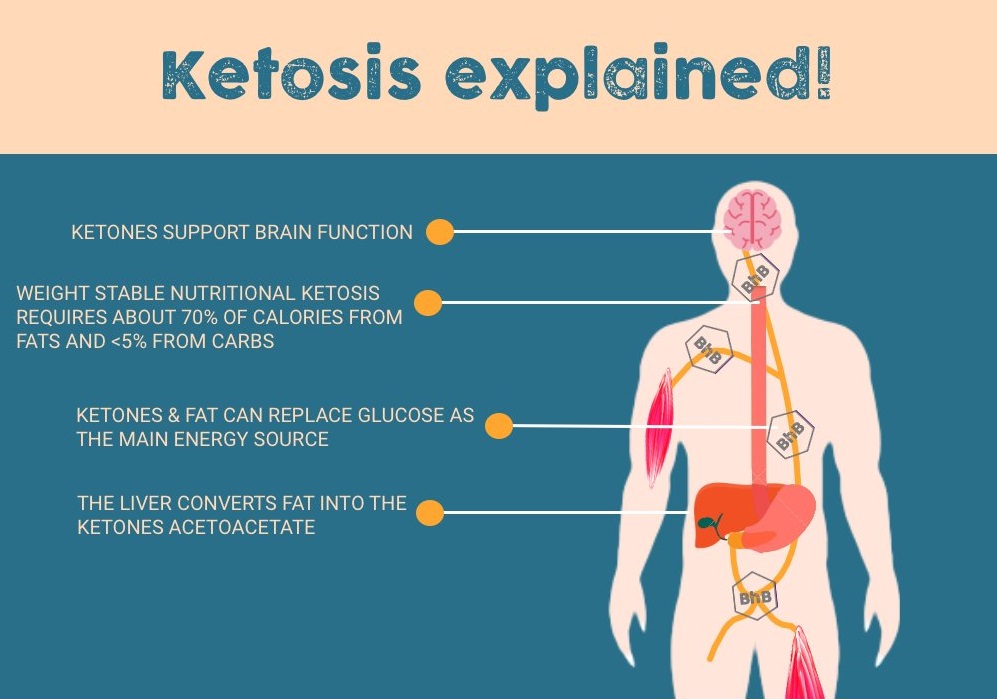
1. What Is Ketosis ?
Ketosis is a natural metabolic state. It involves the body producing ketone bodies out of fat, and using them for energy instead of carbs. You can get into ketosis by following a very low-carb, high-fat ketogenic diet. In addition to fast weight loss, ketosis may have several health benefits, such as reduced seizures in epileptic children. Ketosis is quite complex, but this article explains what it is and how it can benefit you.
Ketosis is most often associated with ketogenic and very low-carb diets. It also happens during pregnancy, infancy, fasting and starvation. To go into ketosis, people generally need to eat fewer than 50 grams of carbs per day and sometimes as little as 20 grams per day. This requires removing certain food items from your diet, such as grains, candy and sugary soft drinks. You also have to cut back on legumes, potatoes and fruit.
When eating a very low-carb diet, levels of the hormone insulin go down and fatty acids are released from body fat stores in large amounts. Many of these fatty acids are transferred to the liver, where they are oxidized and turned into ketones (or ketone bodies). These molecules can provide energy for the body.
Unlike fatty acids, ketones can cross the blood-brain barrier and provide energy for the brain in the absence of glucose.
BOTTOM LINE is very simple and powerfull:
Ketosis is a metabolic state where ketones become the main sources of energy for the body and brain. This happens when carb intake and insulin levels are very low.
2. Getting into Ketosis in 7 Steps
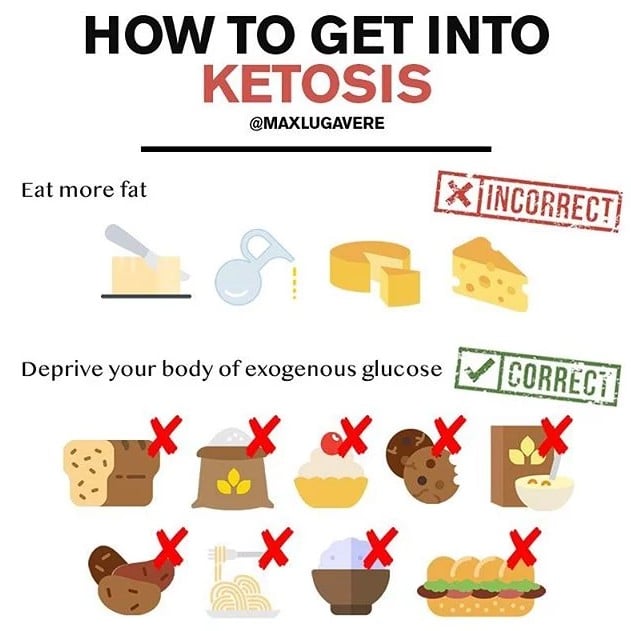
Getting into Ketosis. 7 Easy Steps
Entering the state of ketosis is quite simple, but at first glance it may seem complicated and confusing. Here is what you need to do in order of importance:
1. Limit your carbohydrates. Most people tend to focus only on pure carbohydrates. If you need great results, limit them. Try to stay below 20 grams of pure carbohydrates and below 35 grams of carbohydrates per day.
2. Limit protein intake. Too much protein can lead to lower levels of ketosis. Ideal for weight loss – between 0.6 g and 0.8 g protein per pound of lean body mass.
3. Stop worrying about fat. During the ketogenic diet, fat is the main source of energy – so make sure you feed your body enough. Being on a keto diet, you do not lose weight because of hunger.
4. Drink water. Try to drink about 1 gallon (3.8 liters) of water per day. It helps not only to regulate many vital body functions, but also to control hunger levels.
5. Stop snacking. Weight loss tends to improve when you have less insulin splashes during the day. Unnecessary snacks can stop or slow down weight loss.
6. Start fasting. This can be a great tool for raising ketones throughout the day.
7. Add exercise. It is known that exercise is improving. If you want to make the most of your ketogenic diet, consider adding 20-30 minutes of exercise per day. Even a short walk can help regulate weight loss and blood sugar levels.
Note: Always be vigilant and make sure that you check the composition of the product on the labels. You will often find hidden carbohydrates in foods that seem useful during keto.